There's a moment (between tearing the wrapping paper and opening the first page) when everything changes.
A hardcover book with their name on the cover. Their stories. Their life. In their own words.
We hear about this moment constantly from the families who use Tell My Life Story. They describe it in phone calls and emails, sometimes weeks or months after the book arrives, because it takes that long to find the words for what they felt. A father who never talks about his feelings holding the book against his chest. A grandmother reading her own opening paragraph aloud and then going silent. A husband and wife sitting on the couch, passing the book back and forth, laughing at stories they had forgotten they had told.
These are five of those moments. The names are real. The details are theirs. We're sharing them because every family deserves to know what becomes possible when someone simply picks up the phone and starts talking about their life.
Emily R.: “She Cried. We All Did.”
Emily had been thinking about it for two years before she finally did it. Her grandmother, Astrid, was turning eighty-five. Born in a small coastal town in Norway, Astrid had immigrated to Minnesota at twenty-two, alone, with two suitcases and an address written on a napkin. The family knew the broad strokes. They knew she came from Norway. They knew she met Grandpa at a church social. But the details, the real texture of her life, had always lived only inside Astrid herself.
Emily signed up for Tell My Life Story in November, hoping to have the book ready for Astrid's birthday in January. She was nervous her grandmother would refuse; Astrid was a private woman, not the type to sit down and record her memoirs. But the process surprised them both. The AI interviewer called Astrid on her home phone, and the two of them talked for almost an hour that first session. Then another. Then another.
The stories that came out were ones the family had never heard. Astrid talked about the crossing: five days on a ship from Bergen to New York, sleeping in a bunk below a woman from Trondheim who sang hymns in her sleep. She talked about her first winter in Minnesota, which she said was colder than anything she had experienced in Norway, not because of the temperature but because of the loneliness. She talked about a man named Henrik, a carpenter she had almost married before she met Emily's grandfather. She had never mentioned Henrik to anyone in the family. Not once in sixty years.
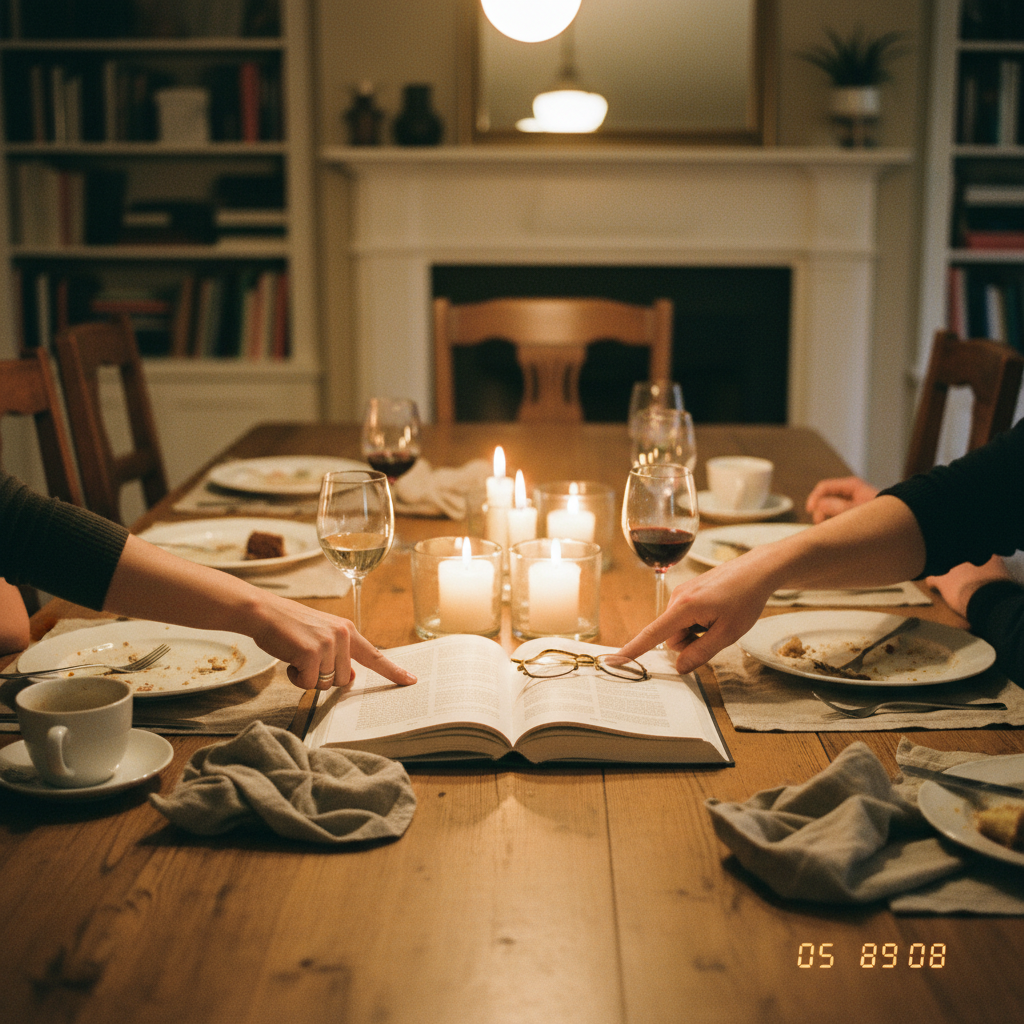
The book arrived the first week of January. Emily wrapped it in gold paper and placed it at the center of the birthday table, surrounded by Astrid's children, grandchildren, and great-grandchildren, twenty-three people in all.
Astrid opened it slowly. She ran her fingers across the cover, where her name was embossed in gold lettering. She opened to the first page and began to read aloud.
“That's exactly how it happened,” she whispered. She closed the book and pressed it against her chest. She couldn't continue reading. Neither could anyone else. Emily says the room was completely silent except for the sound of people trying not to cry.
The family ordered twenty copies, one for every grandchild. Emily told us that her cousin in California called her two weeks later and said he had read the entire book in one sitting at his kitchen table, and that he felt like he finally understood where he came from.
Marcus T.: “Dad Finally Told Us About Vietnam”
Marcus's father, Raymond, served two tours in Vietnam between 1968 and 1970. In the fifty-plus years since he came home, he had spoken about it exactly twice: once to his wife, briefly, on their wedding night, and once to a VA counselor in the 1980s. His children grew up knowing that their father had been to war and that the war wasn't something they were supposed to ask about.
Marcus didn't buy the Tell My Life Story book expecting his father to talk about Vietnam. He bought it as a Father's Day gift, hoping Raymond would share some stories about growing up in Alabama, about meeting their mother, about his thirty years as a high school history teacher. If the war came up, fine. If it didn't, that was fine too.
It came up on the third call.
Over six phone conversations with the AI interviewer, Raymond opened up in a way his family had never witnessed. He didn't talk about the horrors (those, he said, he had made peace with in his own way). He talked about the friendships. He talked about a sergeant named Dwayne who taught him to play chess using bottle caps for pieces. He talked about the humor: the absurd, dark, necessary humor that kept them sane. He talked about sitting in a foxhole one night during monsoon season, rain pouring down so hard he couldn't hear himself think, and deciding in that exact moment that when he got home, he was going to become a teacher. He wanted to teach young people about history so they might understand, even a little, what it costs.
“He told the AI things he never told us,” Marcus said. “Not because he didn't want to, but because nobody ever asked the right way. There was no judgment. No pity. No flinching. Just someone listening, and then asking the next question.”
When the book arrived, Marcus read the Vietnam chapters first. He sat in his truck in the driveway and read them twice. Then he went inside and hugged his father without saying a word.
Raymond has since asked Marcus to order copies for his old unit buddies, the three who are still alive. He wants them to have it. He says the book tells the truth, and the truth wasn't as terrible as keeping it inside.
Sarah & David: “Our Wedding Gift to Grandpa”
Sarah and David didn't want a traditional wedding registry. They didn't need a blender or a set of wine glasses. What they wanted was to give something to David's grandfather, Walter, who had raised David after his parents divorced when he was seven. Walter was eighty-one, still sharp, still telling stories at every family dinner, but no one had ever thought to write any of them down.
Instead of asking their wedding guests for household items, Sarah and David set up a contribution page for a Tell My Life Story book for Walter. They explained on the page that the man who had given David everything deserved to have his own story told, and that their guests could be part of making it happen.
The response was immediate. Guests contributed enough within the first week. But the real surprise was Walter himself.
He loved the process. He didn't just participate, he threw himself into it. He completed twelve phone interviews, and when the AI interviewer asked if he had anything else he wanted to share, he said yes and scheduled two more sessions. He talked about growing up on a farm in Iowa, about enlisting at eighteen, about coming home and meeting his wife, Dorothy, at a dance where the band played so badly that everyone danced close just to drown out the music. He talked about losing Dorothy. He talked about the day David came to live with him, and how that small boy with the serious eyes saved his life in a way no one around him understood.
The book arrived the week before the wedding. David had planned to read a brief passage during his reception speech. He had practiced it a dozen times in the mirror. He made it through exactly one paragraph before his voice broke.
“There wasn't a dry eye in the room,” Sarah told us. “Not one. Even the caterers stopped what they were doing. David finished the passage, walked over to Walter's table, and handed him the book. Walter held it in both hands like it was something holy. He didn't say anything. He didn't have to.”
Their wedding video, Sarah says, captures the whole thing. It's the part everyone asks to see. Not the vows. Not the first dance. The moment David gives Walter the book.
The Richardson Family: “40 Years of Marriage in One Book”
Janet Richardson ordered the book for her parents' fortieth wedding anniversary. She assumed it would be a straightforward project: her parents, Robert and Diane, were both healthy, both good talkers, both full of stories about their life together.
What she didn't anticipate was how different their stories would be.
Robert and Diane each did their own phone interviews, sometimes separately, sometimes together on speakerphone, finishing each other's sentences and gently correcting each other's facts. The book the AI produced weaves both voices together in a way that Janet says is unlike anything she has ever read.
His version of the proposal: a carefully planned evening at the restaurant where they had their first date, with a ring hidden in his jacket pocket for three weeks because he kept losing his nerve. Her version: she knew he was going to propose the moment he suggested that specific restaurant, because Robert hated that restaurant and only went there when he was trying to be romantic.
His memory of their first apartment: a sunny two-bedroom on the third floor with a view of the park. Her memory of that same apartment: a cramped two-bedroom on the third floor with no elevator, a leak in the kitchen ceiling that dripped into a pot every time it rained, and a neighbor who played trumpet at six in the morning.
His recollection of the early years of parenting: the best time of his life. Her recollection: the hardest and the best, simultaneously, in ways he never fully understood because he traveled for work three weeks out of four.
“It's the most honest portrait of a marriage I have ever read,” Janet said. “Not because it's dramatic or scandalous, it isn't. It's honest because you get both sides. You see how two people can live the same life and remember it completely differently, and how that's actually what makes a marriage work. They aren't telling the same story. They're telling their stories, side by side.”
Janet gave the book to her parents at their anniversary dinner. Her mother read it in two days. Her father took a month: he read one chapter each night before bed, like he was rationing it. When he finished, he started again from the beginning.
James K.: “The Retirement Gift That Changed Everything”
James didn't buy the book himself. His father's company did: a regional engineering firm in Ohio that had employed his father, Gerald, for thirty-seven years. Someone in HR had heard about Tell My Life Story's corporate gifting program and suggested it as a retirement gift instead of the usual plaque and handshake.
James was skeptical. His father was a quiet, practical man, a civil engineer who spoke in measurements and deadlines, not emotions. Gerald had never written a journal entry in his life. He had never expressed interest in having his story told. The idea that he would sit on the phone with an AI and talk about his feelings struck James as, frankly, absurd.
Gerald completed fifteen phone interviews.
Fifteen. The man who answered every question at the dinner table with “fine” or “not bad” talked to the AI interviewer for over twelve hours total. He talked about growing up near Lake Erie, about building model bridges out of popsicle sticks with his father, about the summer job at a construction site that made him fall in love with engineering. He talked about the bridges he had designed, not the technical specifications but the feeling of driving over one for the first time and knowing it would hold. He talked about his fishing boat, a sixteen-foot aluminum skiff he had owned for twenty-five years and maintained with the same precision he brought to his engineering work.
“Give him a photo of his old fishing boat and an AI that actually listens?” James said. “He'll talk for hours. The thing is, he was never quiet because he had nothing to say. He was quiet because nobody ever sat still long enough to hear it.”
The book became the family's most prized possession. It sits on the mantel in Gerald's living room, next to his wedding photo and a picture of his grandchildren. James says his father brings it out every time someone visits. He doesn't read from it himself, he hands it to the guest and says, “Here. This is my life.”
James has since ordered a Tell My Life Story book for his mother. And one for his wife's parents. He told us that he has stopped buying people gifts that can be thrown away. “Once you give someone their own story,” he said, “everything else feels small.”
What These Families Have in Common
Every one of these families told us the same thing: they didn't expect it to work.
They thought their loved one wouldn't participate. They thought the person was too private, too quiet, too practical, too old, too stubborn. They thought an AI couldn't possibly capture someone's real voice, their cadence, their humor, the way they circle back to the things that matter most.
Every single one of them was wrong.
The phone is the perfect medium for this. It's natural. It's comfortable. There's no technology to learn, no app to download, no camera to sit in front of. Just a phone call, the same thing these people have been doing their entire lives. And because it's an AI on the other end, there's no awkwardness, no self-consciousness, no feeling that they're being judged or pitied or rushed. The AI asks a question. They answer it. The AI asks another. They keep talking. And somewhere in that conversation, the stories come out, the ones they forgot they remembered, the ones they never thought anyone would want to hear.
You can learn more about how the process works, or see our pricing for details on what's included.
Every Family Has Stories Worth Preserving
You don't need a famous ancestor or a dramatic life to deserve a memoir. You don't need someone who crossed an ocean or fought in a war or built a company from nothing. You need someone who lived. Who raised children, or taught school, or built things with their hands, or loved someone for forty years, or simply showed up every single day and did their best.
That's a life worth recording. That's a story worth telling.
And all it takes is someone who cares enough to make sure it doesn't disappear.
The families in this article waited until they were ready. Some waited years. If you've been thinking about doing this for someone you love, you already know it's time. The stories are there, waiting to be told. The only question is whether they'll be captured before they're gone.
Start a memoir for someone you love or explore gift ideas for grandparents and corporate gifting options for your team. You can also browse more articles about preserving family stories.


